Creation date : 25/12/2021
#1 Take advantage of subsidies to install your solar panels
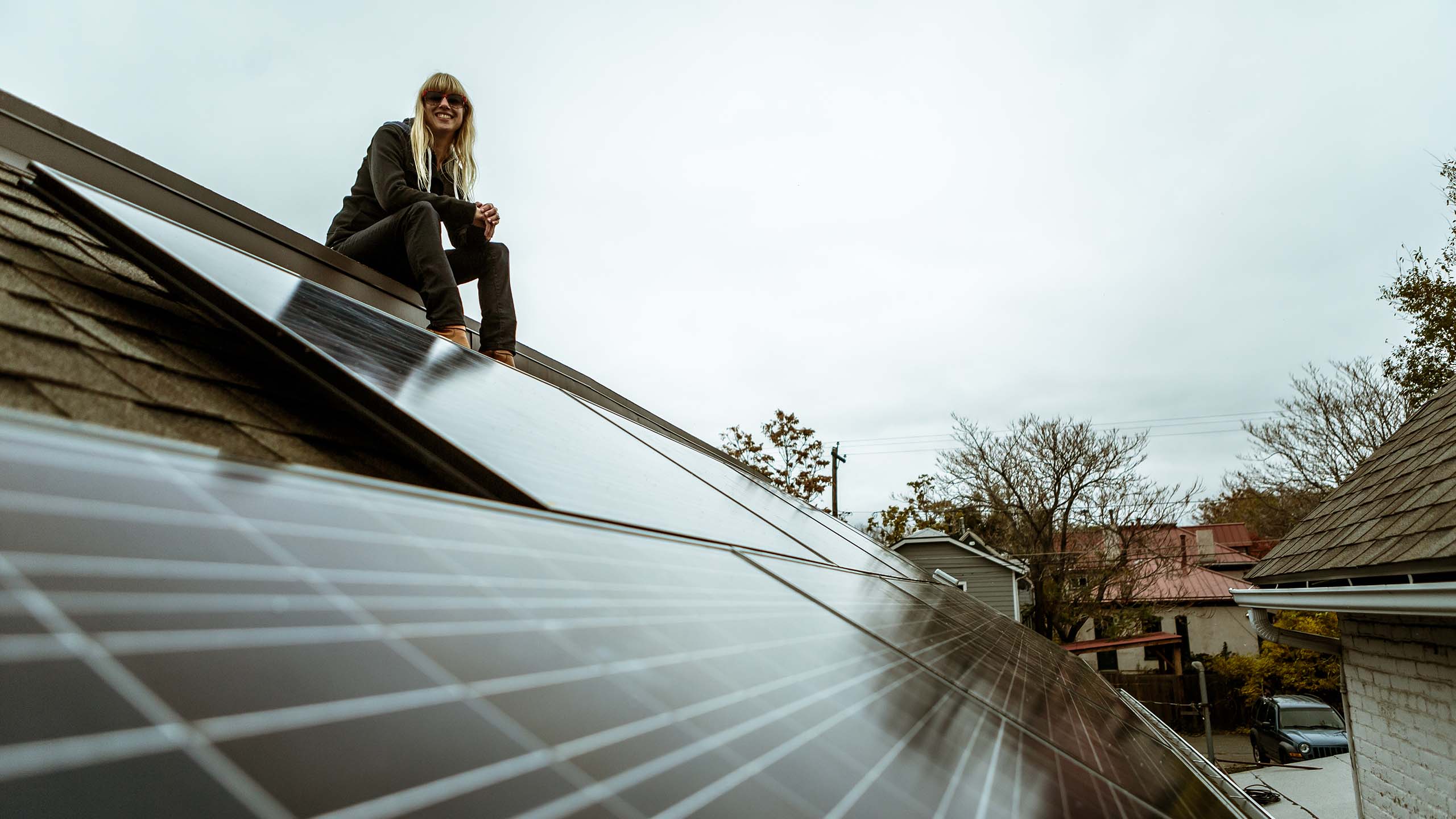
State subsidies in the Grand Duchy are aimed at both owner-occupiers and landlords of single-family homes. These financial incentives are directly part of an approach aimed at improving the overall energy performance of homes. To qualify, minimum technical conditions must be met: the work must be carried out by a certified and approved professional, and the installation must be officially connected to the local electricity distribution network.
How much is the subsidy? For the purchase of a photovoltaic system, you can obtain a subsidy of 20% of the investment cost, with a ceiling of € 500 per kWp* (maximum: 30 kWp). *The kilowatt-peak (or kWp) is the unit of measurement used to assess the power attained by a solar panel when exposed to maximum solar radiation.
For example, a 7 kWp installation would cost between € 10,000 and € 14,000 to install. In this case, the PRIMe House subsidy would amount to € 1,750 in the low range and € 2,300 in the high range.
And remember that the PRIMe House subsidies are extended until 31 December 2025 for the installation of solar panels. To learn more about the subsidies for the installation of solar panels, visit the Myenergy website.
#2 Make the most of the attractive resale rates

What can you do with the electricity produced by your installation? You can either use it yourself or sell it on, it’s up to you. However, given the attractive feed-in tariffs, resale, i.e. injecting the electricity into the grid, is currently the solution most customers opt for.
For example, for an installation of up to 10 kWp completed in 2022, the Luxembourg government will buy back your electricity at the same rate for 15 years, i.e. 0.1506 per kW/h. As a quick comparison, in France, these prices are re-evaluated every quarter and are set at € 0.1493 per kW/h in October 2021.
#3 Tax exemption for income from the resale of electricity

As a new incentive for households, income from photovoltaic installations with a capacity of 10 kWp or less doesn’t have to be declared in your tax return.
#4 Earn money with a return of 3 to 8.5%

Against a backdrop of fluctuating electricity prices in Luxembourg, solar photovoltaic power is becoming a highly strategic choice. The return on investment (ROI), generally observed between 8 and 12 years for equipment with a lifespan of more than 25 years, now takes on a less speculative and much more asset-based dimension by directly enhancing the value of your property. To maximise this return, it is worth weighing up self-consumption (using your own energy to reduce your bills) against selling electricity back to the grid (all of it or the surplus).
The profitability of a solar panel installation varies depending on the building, the roof surface, its orientation and degree of inclination.
MyDiego has developed a simulator that gives you an initial idea of your project’s expected profitability. Simply submit a project request on their website. You will be contacted to carry out this simulation over the phone.
Myenergy, for its part, tends to put the focus on the return on investment timeframe, which can be anywhere between 8 and 12 years. Given that a photovoltaic installation has a lifespan of 20 to 30 years, there is no doubt that it represents a profitable investment.
Remember to regularly service your system (inspection every 5 to 10 years by an installer and regular cleaning by yourself or a professional) to keep your solar panels operating smoothly in the long-term.
Starting a solar project involves completing several mandatory formalities, which vary mainly depending on the size and power of your installation.
From submitting the authorisation application to your municipality through to applying for Klimabonus state subsidies, the key steps can seem complex for private individuals. Fortunately, the process is largely well-defined: your approved installer generally supports you throughout these administrative formalities and handles most connection applications with the network operator (Creos, Sudstroum, etc.).
#6 Do photovoltaic panels require specific insurance?
Photovoltaic panels are not always covered by default under standard home insurance policies. As fixed outdoor installations, they most often require a specific declaration to your insurer in order to be covered by an extension of cover. It is essential to cover major risks such as severe weather (hail, storm), fire, theft, vandalism or electrical surges. In addition, these installations may affect your third-party liability if an element becomes detached and causes damage to a third party. Remember to check your compensation limits, the exclusions and any cover for loss of income if production is interrupted after a claim.
What risks threaten your solar panels and how can you insure them?
| Glass breakage on photovoltaic modules or tearing away of roof fixings. | Covered via the ‘Fixed technical installations’ extension of cover in your home insurance policy. |
| Destruction of the inverter or the electrical components of the system. | Covered provided that you have declared the existence and value of the equipment to the insurer. |
| Theft of accessible modules or deliberate damage to the equipment. | Covered according to the security conditions defined in the policy (fences, accessibility). |
| Production stoppage due to wear and tear or a manufacturing defect. | Excluded (Falls under the manufacturer’s warranty or the installer’s completion guarantee). |
Check that your installation is covered by your insurance, as photovoltaic panels can be damaged by bad weather or even fire. The good news for AXA policyholders is that solar panels are treated in the same way as the building. You don’t have to make any declaration when you install this type of equipment. It is automatically covered by your home insurance. There is no extra cost and you are covered for replacement value without any specific limitation in case of fire, and up to € 50,000 in case of hail, storm or electrical damage.
Ready to save money by producing 100% green energy? Now is the right time to get started!
💡You rent or own a house or an apartment? Insure your home with a full coverage: fire, storm, multimedia, travel, sports equipment, theft and breakage and much more ...